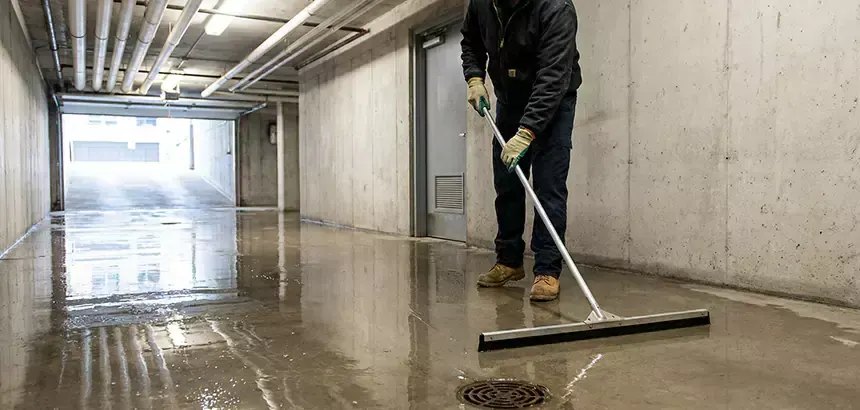
A sump pump works quietly for months and then fails on the one night it is needed most. In Arvada that night is usually a heavy storm, when the creeks and gulches are running high.
Key takeaways
- A failed pump lets the pit overflow, and the water can cover a basement floor in a short stretch of a storm.
- Arvada City Code makes it illegal to discharge a sump pump or groundwater into the sanitary sewer.
- Ralston Creek and Leyden Creek flash flooding, plus urban runoff, are the local drivers of basement water.
- Shut off power to a wet basement before stepping in, and never run a pump hose into a floor drain connected to the sewer.
- Drying the slab, the wall bottoms and the carpet padding is what keeps a flooded basement from turning into a long term problem.
Why sump pumps fail when it rains hardest
A sump pump sits in a pit and moves groundwater away from the foundation. It is simple, and it fails in a few predictable ways.
Storms stress it the most. The pit fills quickly, the float rises and the motor runs flat out, so any weak part gives way when the load is highest.
- A power outage during a storm shuts off an electric pump with no battery backup.
- A stuck float switch keeps the pump from starting or from shutting off.
- A clogged intake or discharge pipe slows the pump until the pit overflows.
- An old motor burns out after years of sitting idle between storms.
- A frozen or kinked discharge hose backs water into the pit.
What Arvada's weather and creeks mean for basements
Arvada averages about 16.09 inches of precipitation a year, but the water does not arrive evenly. The US Army Corps of Engineers describes the typical flood threat as flash flooding, made worse by development in the Ralston Creek watershed over the past 40 years.
Ralston Creek drains 91 square miles. Most Arvada residents inside the Special Flood Hazard Area live along it.
Leyden Creek between Leyden Lake and Alkire Street flooded in 2013. Runoff on Little Dry Creek and Big Dry Creek also sends water toward low lying lots.
Housing that feels it
Much of Arvada's housing dates to the 1960s through 1980s, when the city grew from 19,242 residents in 1960 to 84,576 in 1980. Many of those homes have basements that sit below the water table in a wet spring.
Colorado Geological Survey calls swelling soil the state's most significant geologic hazard. Swelling clay can damage slabs and basement floors, and cracks give water a way in.
The city code rule on where pump water goes
Arvada City Code makes it illegal to discharge a sump pump or groundwater into the sanitary sewer. The sanitary system is built for household waste, not for storm and groundwater flow.
Pumps must discharge to a landscaped surface or another approved means. Pointing the hose into a laundry sink or a floor drain that connects to the sewer breaks that rule, and it can overload the system during the same storm that is flooding neighbors.
- Run the discharge hose to a yard surface that slopes away from the foundation.
- Keep the hose end several feet from the wall so water does not return to the basement.
- Never connect the discharge to a drain that leads to the sanitary sewer.
- Ask the City of Arvada Utilities Department if a discharge point is unclear.
First steps when the pit is overflowing
Safety comes first. Water and electricity share a basement in a way that can be deadly.
If water is touching outlets, appliances or the furnace, stay upstairs and have the power shut off at the panel before going down.
- Turn off power to the basement at the main panel only if the panel is dry and reachable.
- Unplug the failed pump and check whether the float moves freely.
- Move electronics, boxes and furniture off the floor.
- Photograph the water level, the pit and everything that is wet.
- Call for water extraction before the water soaks into drywall and carpet padding.
How the cleanup works
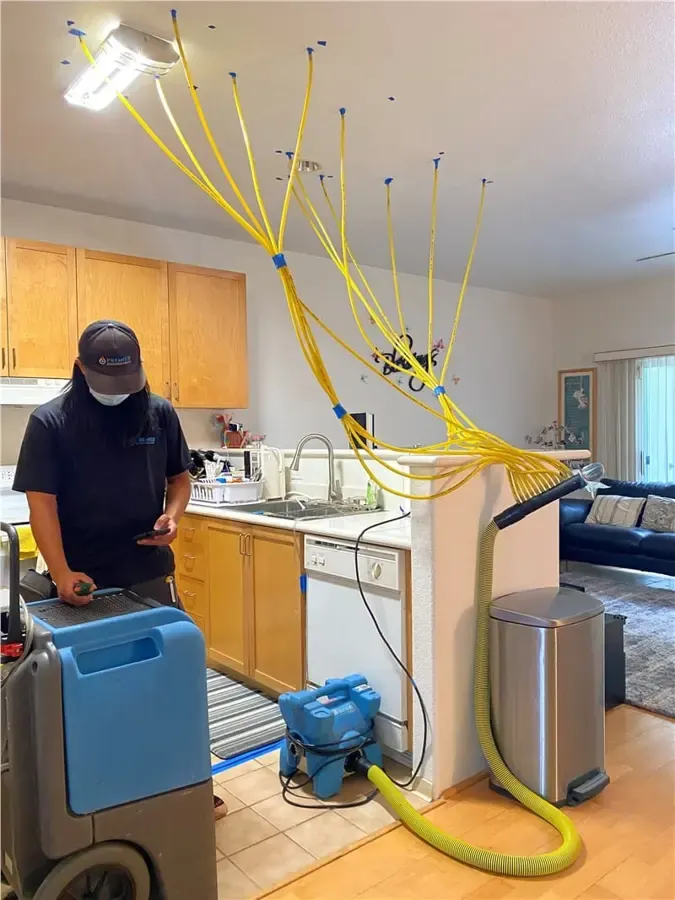
A sump pump failure cleanup starts with extraction. Truck mounted or portable extractors pull standing water off the slab and out of carpet.
Water that comes from groundwater or storm runoff is treated with more caution than clean supply water. It can carry soil and bacteria, which changes what can be kept and what has to be removed.
Next the crew maps moisture in the walls, the baseboards and the floor. Wet drywall is cut above the high water mark, and carpet padding is removed because it holds water.
Drying the structure
Air movers and dehumidifiers run for days in a flooded basement. Concrete dries slowly, so patience matters.
The goal is a reading on the wall bottoms and the slab that matches a dry reference, the standard behind basement flooding cleanup work in the city.
Fixing the pump after the water is gone
A plumber or pump installer repairs the pump, but drying should not wait for the part. Both can be done at the same time.
A battery backup, a water alarm and an annual test before spring runoff are the common upgrades after a failure.
Preventing the next failure
A pump that is tested before the wet season is far less likely to fail during it. The checks take only a few minutes.
- Pour a bucket of water into the pit each spring to confirm the float and the motor.
- Clear debris from the pit and the discharge pipe.
- Install a battery backup for storm outages.
- Add a water alarm on the basement floor.
- Check that the discharge hose still slopes away from the house.
Documenting the loss for insurance
Many policies treat sump pump overflow differently from other water damage, and flood damage is often excluded. Reading the policy early avoids surprises.
A clear file with photos, readings and a note of when the pump stopped helps the adjuster understand the loss. The main sump pump failure cleanup page lists what the file should hold.
Renters, landlords and shared basements
About 24.7 percent of occupied Arvada homes are rented. A tenant who finds a failed pump should tell the landlord in writing and take photographs before moving anything.
In a building with several units, water can spread from a basement to the first floor above. Each household should report its own loss and keep its own record.
Questions
Can a sump pump drain into the sanitary sewer in Arvada?
No. Arvada City Code makes it illegal to discharge a sump pump or groundwater into the sanitary sewer. Pumps must discharge to a landscaped surface or another approved means.
What should be done first when the pit overflows?
Check the electrical hazard, move belongings up and photograph the water. Then arrange extraction so the water does not soak into walls and carpet.
Is sump pump water considered clean?
Not usually. Groundwater and storm runoff can carry soil and bacteria, so it is handled with more care than a clean supply leak.
Does a battery backup really help?
It keeps the pump running through a storm outage, which is when pumps are needed most. It does not replace regular testing.
How long does a basement take to dry?
Carpet and drywall dry in days, but concrete and framing take longer. Readings, not the calendar, show when the job is finished.