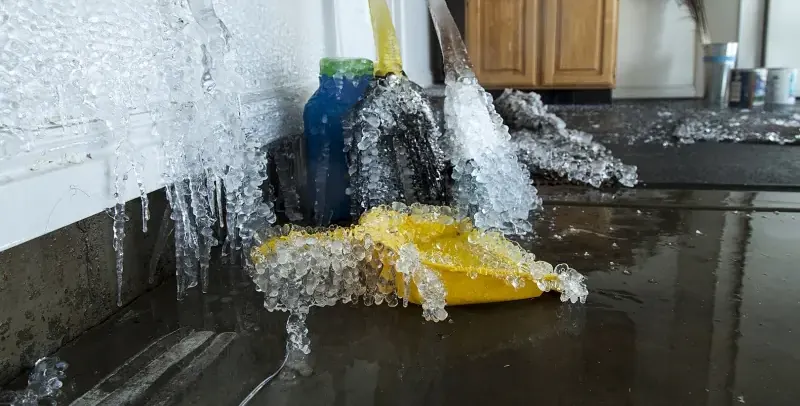
A frozen pipe rarely floods a house while it is frozen. The damage starts when the ice melts and the split pipe sprays water into a wall nobody is watching.
Key takeaways
- Ice plugs a split pipe, so the water arrives at the thaw, often hours after the cold ends.
- Golden's freeze and thaw season runs from October to April, and homes from the 1870s to 1910s have the oldest pipes.
- Shut off the main valve first, then open a faucet at the lowest point so the pipes can drain.
- Plaster, brick and old framing hold water in places a surface check misses, so moisture meters decide where walls open.
- Photographs taken before anything is moved make the insurance file much easier.
Why the pipe splits and the water waits
Water expands as it freezes. In a pipe, that pushes outward against the wall of the metal until a seam or a thin spot gives way.
The split is usually invisible while the ice holds. Water only moves once the pipe thaws, which is why the first sign is often a wet floor on a warm afternoon.
Golden sits at about 5,700 feet, and the cycle of freezing nights and thawing days runs from October to April. A pipe can freeze and thaw many times in a single week.
- Exterior walls on the north side lose the most heat.
- Garages, crawl spaces and unheated porches freeze before the rest of the house.
- Pipes behind kitchen sinks and under bathrooms on outside walls are the usual suspects.
Why older Golden homes are different
Downtown Golden and the 12th Street Historic District hold brick and frame homes from the 1870s to the 1910s. Many have been remodeled around their original plumbing.
Galvanized steel and early copper are common in that housing stock. Both can be thin at joints and corroded inside, so a freeze finds the weak spot quickly.
Brick and plaster walls
Brick holds water longer than modern drywall. Plaster over lath can look dry on the surface while the cavity behind it stays wet.
That is why a quick wipe and a fan rarely finishes the job in a century old home.
Frame walls and old floors
Frame walls with no insulation let cold reach the pipe, and they let water run down the cavity into the floor below. Old subfloors and plank decking soak up water and swell.
The same water that ruins a ceiling below can sit on top of a joist for days.
What to do in the first minutes
Speed matters more than perfection. The goal is to stop the water, protect what can be moved and call for extraction before the water spreads to other rooms.
Do not try to thaw a split pipe with a torch or a space heater pointed at the wall. A hair dryer is the most that is safe, and only on a pipe that has not yet leaked.
- Close the main water valve, usually near the meter or where the supply enters the house.
- Open a faucet at the lowest point of the house so the supply drains.
- Turn off power to wet rooms from the panel if outlets or switches are near the water.
- Lift small furniture and rugs onto blocks or foil.
- Take photos and short video of the pipe, the wall and the floor before cleanup starts.
How the cleanup works
The first job is extraction. Standing water and soaked carpet or padding are pulled out so the floor can start to dry.
A water extraction crew uses pumps and extractors rather than towels and shop vacuums.
Next comes moisture mapping. Meters and a thermal camera show where water traveled, which often includes rooms the owner never noticed were wet.
Walls are opened only where the readings call for it. In a plaster home, that can mean a few small access holes rather than tearing out a whole wall.
Drying equipment
Air movers push dry air across wet surfaces, and dehumidifiers pull moisture out of the air so the water has somewhere to go. Equipment usually runs for several days, and readings are taken each visit.
The target is a dry reference reading from an unaffected part of the same house. That is the standard behind structural drying in a home like this.
Documentation for the claim
Readings, photographs and equipment logs are kept as the work goes. They show an insurer what was wet, how wet it was and when it was dry.
The cause of loss matters too, and a frozen pipe cleanup file records where the pipe failed and how the water moved.
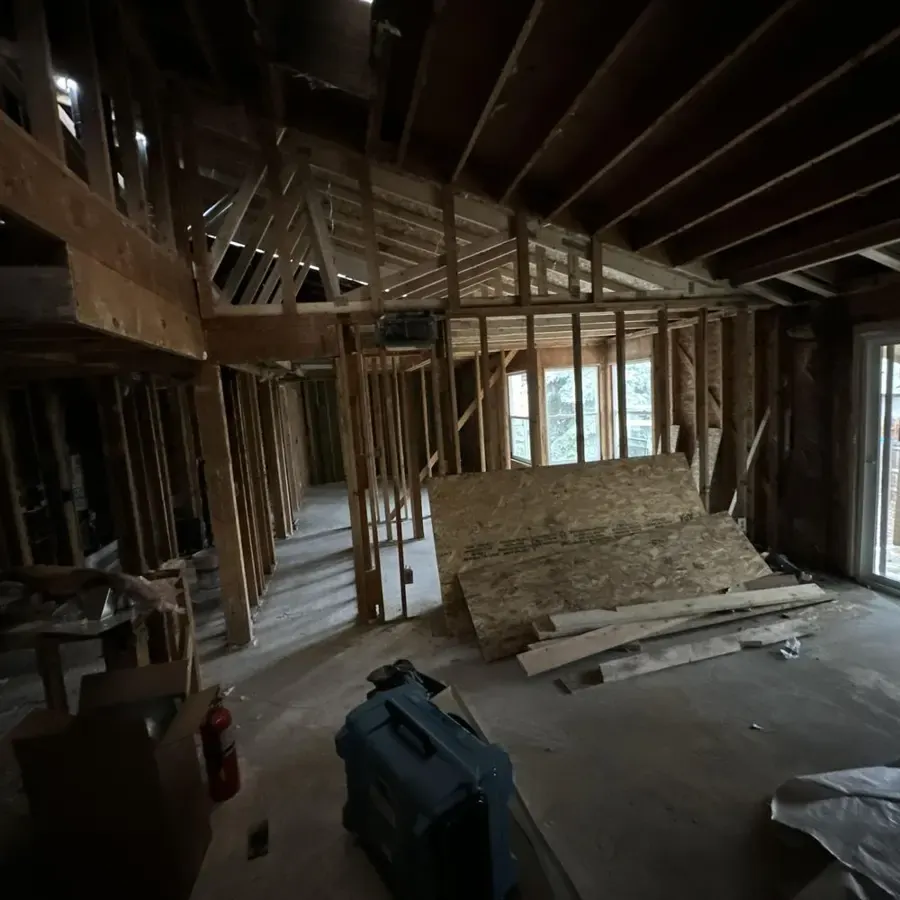
When a frozen pipe becomes a burst pipe
A frozen pipe is not always a burst pipe. Some pipes freeze and hold, and nothing leaks after the thaw.
If a pipe has split, however, the situation is a burst pipe with a delay.
The difference is whether water is moving. A visible spray, a stain spreading across plaster or a meter that keeps turning after every tap is closed all point to a burst.
The service pages for frozen pipe cleanup and burst pipe water damage describe how each loss is handled in Golden, from extraction to drying.
Signs a pipe has split but not leaked yet
A pipe can split in the cold and show nothing until the thaw. The clues in the days before are subtle, and they are worth knowing in a home with old plumbing.
Low flow from a single faucet on a cold morning means ice is somewhere in that run. If water slows to a trickle and then stops, the pipe is likely frozen and could be cracked.
- A faucet that runs slow or not at all when others work.
- Frost on the outside of a pipe in a crawl space or garage.
- A pipe that bulges or looks flattened at one spot.
- A sound of running water inside a wall after the weather warms.
- A damp spot or a musty smell on a plaster wall that was dry the day before.
What an insurer tends to look for
An adjuster usually asks when the cold started, whether the house was heated and what was done to protect the pipes. Keeping the heat on and the shutoff known counts in the owner's favor.
Photographs of the split pipe itself are valuable, because the failed section is often replaced and thrown away within a day. A plumber's note about the cause rounds out the file.
Ways to lower the risk before the next freeze
Prevention is cheap compared with a flooded dining room. A little attention before October covers most of it.
- Insulate pipes in garages, crawl spaces and outside walls.
- Let a faucet drip on the coldest nights if the pipe runs through an exterior wall.
- Open cabinet doors under sinks on outside walls so house air reaches the pipes.
- Disconnect and drain outdoor hoses and shut off the exterior spigot.
- Know where the main shutoff is and make sure everyone in the house can find it.
Questions
Will a frozen pipe always burst?
No. Many freeze and hold. The risk is highest in older metal pipes and in pipes on exterior walls, and the leak usually appears after the thaw.
How soon should the water be shut off?
As soon as a leak is seen or suspected. Closing the main valve limits how much water reaches the floors and walls.
Can plaster walls in an older home be saved after a pipe split?
Often, yes. Moisture readings show whether the plaster and lath behind it can dry in place or need small openings to reach the wet cavity.
Does homeowners insurance cover a frozen pipe split?
Many policies cover sudden pipe damage, but terms vary. The policy and the insurer decide coverage, and a clear record of readings and photos helps the claim.
How long does drying take after a split pipe?
It depends on how much water moved and what the walls are made of. Plaster and old framing usually take longer than newer drywall.