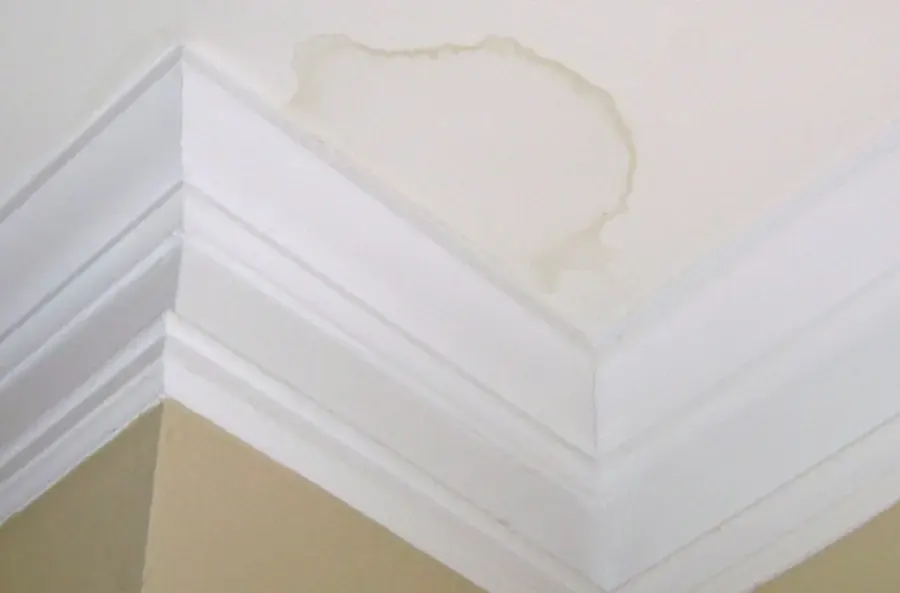
An ice dam is a ridge of ice along the edge of a roof, and it can do real harm without any sign of a roof defect. In Golden the right conditions arrive every spring, when heavy snow meets sunny afternoons and freezing nights.
Key takeaways
- Ice dams form when snow melts on the warm part of a roof and refreezes at the cold eave.
- Golden sits at about 5,700 feet, with freeze and thaw cycles from October to April and heavy spring snow, with March often the snowiest month.
- Trapped meltwater backs up under the shingles and leaks into outside walls and ceilings below.
- A roof rake, attic insulation and air sealing reduce the risk, but they do not remove it.
- Wet insulation and framing have to be dried even after the ice melts and the stain stops growing.
How an ice dam forms
A roof is not the same temperature everywhere. Heat from the house leaks into the attic and warms the upper part of the roof, while the eave stays at the outside temperature.
Snow on the warm area melts, runs down and refreezes when it reaches the cold edge. Over days, that edge builds into a ridge of ice.
Once the ridge is thick enough, new meltwater has nowhere to go. It pools behind the ice and works its way under the shingles.
- Warm attic air from poor insulation or gaps around lights and vents.
- Snow cover that holds heat and keeps melting on sunny days.
- Freezing nights that refreeze the water at the eave.
- Roof valleys and low slopes where water collects.
Why Golden sees them
Golden sits at about 5,700 feet. The climate is semi-arid, with freeze and thaw cycles from October to April and heavy spring snow.
March is often the snowiest month. A big storm followed by a bright week gives the exact pattern an ice dam needs.
Older homes
Downtown Golden and the 12th Street Historic District have brick and frame homes from the 1870s to the 1910s. Many have steep roofs, old attics and little insulation compared with a modern house.
That means more heat reaches the roof and more snow melts.
Hillside and newer homes
Homes from the 1970s to the 1990s on the slopes below Lookout Mountain and the Table Mountains often have complex rooflines with valleys and dormers. Newer townhomes on the east side have long shared eaves.
Each valley and eave is a place where an ice dam can start.
Where the water goes inside
Meltwater that backs up under shingles reaches the roof deck. From there it follows gravity.
It soaks the insulation, runs down the inside face of the outside wall and appears as a stain on the ceiling or near a window.
- A brown stain along the top of an exterior wall.
- Paint that bubbles or peels near the ceiling edge.
- Wet insulation in the attic above the eave.
- Water dripping from a light fixture or a ceiling fan.
- Damp drywall that feels cold and soft to the touch.
What to do when a dam is leaking
Safety on the roof matters more than the ice. Climbing up to chop at an ice dam with an axe damages shingles and can cause a fall.
- Stay off the roof and off a ladder in icy conditions.
- Place a bucket under any drip and move furniture away.
- Poke a small hole in a bulging ceiling to let the water drain into a bucket.
- Photograph the ice, the stain and any dripping.
- Call for help with water removal and drying while the roof stays covered.

How the cleanup works
An ice dam water damage job begins with finding the path of the water. Meters and a thermal camera show where the insulation, the wall cavity and the ceiling are wet.
Wet insulation is removed because it keeps water against the drywall. Soaked drywall that has lost its strength is cut out in clean sections.
Drying the cavity
Wall cavities and attic spaces are dried with air movers and dehumidifiers. Small openings let air flow into the cavity so the framing dries from the inside.
The aim is a reading that matches a dry reference, which is the standard behind structural drying in Golden.
Ceiling repair
A ceiling leak water damage repair comes after drying. Painting over a wet ceiling traps moisture and stains return.
Reducing the chance of a repeat
No fix is perfect, but several steps lower the risk. The best ones keep the roof cold evenly so snow melts only when the weather warms it.
- Add attic insulation and seal gaps around lights, vents and the attic hatch.
- Make sure the attic is ventilated so it stays close to outdoor temperature.
- Use a roof rake from the ground to clear the first few feet of snow at the eave.
- Keep gutters and downspouts clear so meltwater has a path.
- Have a roofer check flashing at valleys and chimneys before winter.
Warning signs before the leak starts
An ice dam announces itself before water gets inside. A few minutes outside after a storm is enough to spot the early signs.
Icicles hanging in a row along the eave look decorative, but a long row of them often marks a spot where meltwater is running and refreezing.
- Icicles that grow thick or form across the whole eave.
- A strip of ice along the gutter that blocks the downspout.
- Snow that has melted away in the middle of the roof but stays at the edge.
- Frost on the underside of the roof deck in the attic.
Why a patch on the ceiling is only the start
A brown spot on a ceiling is usually the visible end of a bigger wet area. The insulation above may be soaked well beyond the stain.
That is why the readings matter. A ceiling that looks dry can sit under insulation that stays wet for weeks, and the damp can reach framing and the top of the wall.
Insurance and timing
Ice dam leaks are often covered as sudden water damage, but policies vary. The insurer may ask about maintenance and attic conditions.
A dated photo record of the ice, the leak and the drying readings helps the adjuster. Quick action also limits the secondary damage from wet insulation and framing.
Questions
What is an ice dam?
It is a ridge of ice at the edge of a roof that blocks meltwater from draining, so the water backs up under the shingles.
Do ice dams mean the roof is bad?
Not necessarily. They usually come from heat escaping into the attic, which melts snow unevenly, rather than from a roof defect.
Should the ice be chipped off?
No. Chipping damages shingles and can cause injuries. Clearing snow with a roof rake from the ground is safer.
How is a wet wall cavity dried?
Small openings and air movers push dry air through the cavity, and dehumidifiers remove the moisture until readings match a dry reference.
Can a ceiling stain be painted over?
Not until the area is dry. Paint hides the stain but traps moisture in the insulation and drywall.