Basement Flooding Cleanup in Lakewood, CO
Lakewood basements take on water from gulch storms, split supply pipes and sewer laterals that back up. The crew pumps out the water, hauls away what Category 3 contact ruined and dries walls and slab until the readings settle.
(888) 532-8620Get a Lakewood basement dried out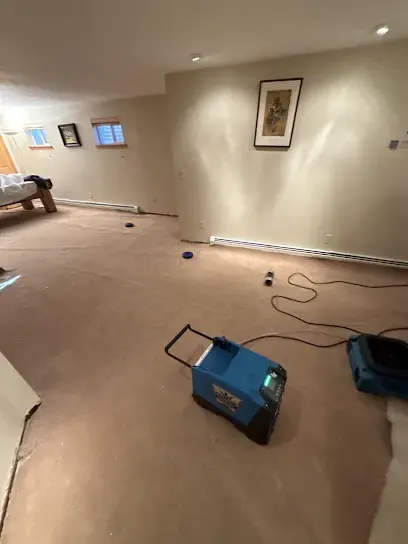
Three routes lead water into a Lakewood lower level: gulch water after heavy rain, a supply pipe that fails, and sewage pushed up a floor drain. The route decides whether materials can be dried or have to go.
First steps for basement flooding cleanup in Lakewood
- 1
Avoid the water
Wet stairs and pooled water near the furnace, water heater or outlets are a shock risk.
- 2
Cut off the supply
If a pipe failed, close the main. If sewage is rising, leave every drain alone.
- 3
Record the waterline
Take pictures from the stairs before touching anything.
- 4
Raise valuables
Put boxes, electronics and furniture on higher ground, then request a pump-out.
What does basement flooding cleanup cost in Lakewood, CO?
Lakewood basement flooding cleanup generally lands between $2,000 and $15,000. Finished space, water depth, time spent underwater and whether the source was clean, gray or black move it up or down.
Bare floor or small area
- Pump then extract
- Dehumidifier plus air movers
- Readings every day
Carpeted, finished space
- Carpet and cushion out
- Cuts where meters say
- Paperwork for the claim
Gulch water or sewage
- Sanitizing of surfaces
- Containment and HEPA
- Longer drying
Ranges are typical, not a quote: category of water, square footage, material class and how fast drying started move the number most. Run the water damage cost calculator for a closer range.
How basement flooding cleanup is handled in Lakewood
The tech who does the walkthrough maps moisture before any equipment goes down, so the drying plan matches what is actually wet. Equipment stays until the readings say dry, not until it looks dry.
Pump first
Pooled water leaves first; carpet and bare floors follow.
Take out the ruined
Cushion, insulation and the bottom of the drywall come out if meters or contamination demand it.
Sanitize and dry
Surfaces are treated if needed, then equipment dries walls and slab.
Verify the numbers
Repairs wait until the meters report a dry structure.
Where Lakewood basement water starts
North Dry Gulch runs beside West Colfax Avenue, and its floodplain reaches more than 100 structures. A Weir Gulch study flags elevated risk in Barnum, Barnum West, Westwood and Valverde. Lakewood Gulch, Sanderson Gulch and Bear Creek also cross the city from north to south.
- Gulch water rising after hard storms near North Dry Gulch or Weir Gulch.
- Supply pipes that fail in winter cold.
- Sewage pushed up a floor drain from a blocked lateral.
What goes out and what stays
First the pooled water is pumped and the carpet extracted, then moisture is traced up each wall before a cut is made. Water from a clean supply pipe caught early often dries without demolition. Gulch water and sewage are Category 3: the carpet, cushion and lower drywall are discarded, and hard surfaces are sanitized ahead of the drying equipment.
- Cut heights are set by meters.
- Studs, framing and slab are read daily.
- Dated photos are taken before demolition for the claim file.
Soil, laterals and the next storm
The Colorado Geological Survey calls swelling clay Colorado's most significant geologic hazard, and it can split basement slabs and strain sewer pipes. That is a Front Range concern, not a Lakewood finding. Owners maintain the sewer lateral. Read sump pump failure cleanup and sewage backup cleanup for related losses.
Basement flooding cleanup across Lakewood and nearby towns
Basement work runs across ZIP 80226, 80227 and 80228, plus 80214, 80215 and 80232, from Barnum West and Bonvue to Green Acres and the Colfax Avenue corridor.
The same service nearby: basement flooding cleanup in Golden, Edgewater, Wheat Ridge.
Related water damage services in Lakewood
Basement Flooding Cleanup questions in Lakewood, CO
Is my Lakewood basement near a floodplain?
North Dry Gulch has a mapped floodplain along West Colfax Avenue, and a Weir Gulch study flags elevated risk in Barnum, Barnum West, Westwood and Valverde. Check the current FEMA map for your address.
Is gulch water in a basement a health risk?
Yes, because water that has run across yards and streets counts as Category 3. Anything porous it reached is discarded, and hard surfaces get washed and sanitized before drying.
Is the North Dry Gulch project finished?
Phase 1 finished in December 2024 and Phase 2 in August 2025. Phase 3 is expected in fall 2026, with later phases through 2027, so the floodplain still matters.
Who deals with a sewer backup into a basement?
Owners maintain the entire lateral from the building to the main. The city offers 24/7 emergency inspections to sort out who is responsible, and cleanup can start alongside.
How many days until a flooded basement is dry?
Usually four to seven, once the water and ruined materials are gone. Concrete and walls that soaked for a long time may take longer.
Is basement flooding covered by homeowners insurance?
That depends on the source. Sudden pipe failures are often covered, rising gulch water falls under flood coverage, and a sewer backup usually calls for its own add-on. Read your policy or ask your insurer.
Flooded lower level? Get the water out now.
Every material in a flooded basement keeps drinking water until it is pumped out. Drying equipment goes in right after.
(888) 532-8620Lakewood lower level dry-out, 24/7- Dispatch around the clock
- IICRC S500 drying standard
- Moisture logs for the claim file
- Find us on Google