Frozen Pipe Cleanup in Lakewood, CO
A Lakewood pipe that freezes can split quietly and release water only when the thaw comes. The drying team extracts it, opens just the wall bays the meters point to and dries the framing before it warps.
(888) 532-8620Dry the walls before the thaw does damage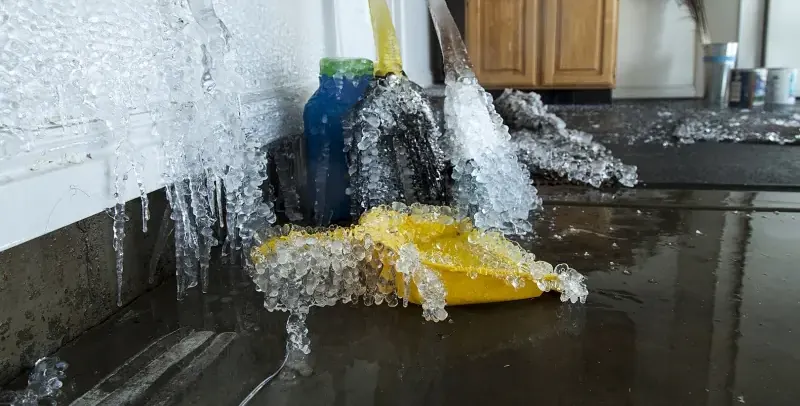
Lakewood averages about 58 inches of snow a year, and Front Range cold snaps can hit the whole metro. The December 2022 Arctic outbreak and the January 2025 polar vortex both burst pipes across the Denver area. Ice swells inside a supply pipe until it splits, and the leak often starts only at the thaw, sometimes while nobody is home.
First steps for frozen pipe cleanup in Lakewood
- 1
Close the main
Turn it all the way off, because the split may flow freely once thawed.
- 2
Open low taps
Drop the pressure so what remains in the pipes can drain.
- 3
Check the panel first
Switch off wet circuits only when the breaker box is dry and reachable.
- 4
Take pictures, then call
Record stained walls and ceilings before moving anything.
What does frozen pipe cleanup cost in Lakewood, CO?
Frozen pipe cleanup in Lakewood generally costs between $1,200 and $10,000. The hours the pipe leaked, the floors and rooms soaked, the cavities that need airflow and how quickly drying begins decide where it lands.
A wall and one room
- Water extracted
- Wall cavity airflow
- Readings each day
Several rooms or two floors
- Wall and ceiling openings
- LGR dehumidifiers
- Adjuster documentation
A leak that ran for hours
- Flooring removed
- Longer structural drying
- Containment between levels
Ranges are typical, not a quote: category of water, square footage, material class and how fast drying started move the number most. Run the water damage cost calculator for a closer range.
How frozen pipe cleanup is handled in Lakewood
The tech who does the walkthrough maps moisture before any equipment goes down, so the drying plan matches what is actually wet. Equipment stays until the readings say dry, not until it looks dry.
Trace it
Meters and infrared imaging mark which walls, ceilings and floors took on water.
Extract
Pooled water is pulled off floors and out of the room below.
Open and dry
Cavities get small openings and forced airflow, not wholesale demolition.
Confirm
Daily numbers are recorded, and drying ends only when materials hit the target.
Where Lakewood pipes tend to freeze
Cold gathers along exterior walls, unheated garages, crawl spaces and the far corners of older houses. Whether the home dates from 1920s Two Creeks or Green Mountain Village, north walls, garage-side runs and sinks on outside walls are where freezing begins.
- Pipes inside outside walls with thin insulation.
- Garage and crawl space runs beneath living areas.
- Outdoor hose bibs still holding water when the first freeze arrives.
How the drying team handles a freeze break
Water from a split supply pipe is clean at first, so most materials dry where they sit if work begins promptly. An infrared camera follows the water, because a split can soak a wall cavity and the ceiling below with no mark on the surface. Small holes or a short cut open the cavity to airflow without gutting the wall.
- Floors and the room beneath are pumped dry.
- Cavities are opened only where meters call for it.
- Air movers and LGR dehumidifiers run until the numbers match the dry reference.
Preventing the next freeze break
On the coldest nights, let outside-wall faucets drip, leave cabinet doors open under sinks and keep the thermostat up when traveling. Score a house with the frozen pipe risk check, and see burst pipe water damage when the cause was not cold.
Frozen pipe cleanup across Lakewood and nearby towns
Freeze calls from Creighton, the Alameda neighborhoods, Rooney Valley and the Wadsworth Boulevard corridor are handled across all of ZIP 80214, 80215, 80226, 80227, 80228 and 80232.
The same service nearby: frozen pipe cleanup in Golden, Edgewater, Wheat Ridge.
Related water damage services in Lakewood
Frozen Pipe Cleanup questions in Lakewood, CO
What are the warning signs of a frozen pipe?
A trickle or nothing at the tap during a hard freeze, or frost on an exposed pipe. Open the tap, warm the space slowly and keep any flame away from the pipe.
Why does the leak appear after the cold ends?
The ice acts like a plug in the split. Once it melts, water streams through the crack, which is why damage often turns up on the first mild day.
Were recent cold snaps a Lakewood-only problem?
No. The December 2022 and January 2025 events were regional, across Colorado and the Denver metro, so Lakewood homes faced the same cold as the rest of the Front Range.
Do walls have to be opened?
Usually only in spots. A freeze break leaks clean water, so a few small holes or a short cut can ventilate the cavity. Wholesale removal is for materials that meters show will not dry.
How long does drying run?
A contained break caught early often needs three to five days. Hardwood, plaster and losses on two floors take longer.
Will insurance pay for a frozen pipe?
A sudden freeze break is often covered if the house was being heated. The policy decides, so check with your insurer.
Freeze split flooding the house? Act before the framing warps.
A thaw can send water through two floors while nobody is home. The extraction crew starts where it pools.
(888) 532-8620Lakewood freeze break crew, 24/7- Dispatch around the clock
- IICRC S500 drying standard
- Moisture logs for the claim file
- Find us on Google