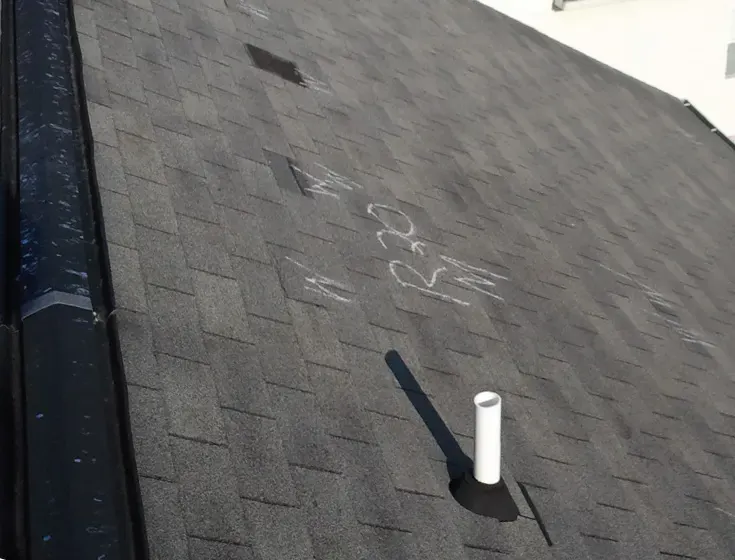
Hail does not always make a roof leak right away. In Wheat Ridge the first sign is often a brown ring on a bedroom ceiling weeks after a storm.
Key takeaways
- Hail bruises shingles and loosens the granules that shed water, so leaks can appear long after the storm.
- Wheat Ridge has a hail history that includes the July 11, 1990 storm on the east side and the May 8, 2017 storm with baseball size hail.
- A ceiling stain is the end of a trail, and the wet spot in the attic can sit well away from it.
- Wet insulation holds water against the drywall, so it has to come out before drying can finish.
- A roofer fixes the roof, and the water cleanup is a separate job that should not wait for the repair.
Why hail leaks show up late
A hailstone does not always punch through a shingle. More often it bruises the mat beneath and knocks off the granules that protect the asphalt.
The roof still sheds water on a dry day. After a few rain storms and some freeze and thaw cycles, those bruised spots crack and let water in.
- Dark, bald patches on shingles where granules are gone.
- Dented vents, flashing and gutters that show the size of the hail.
- Soft spots when the roof deck is pressed from the attic side.
- Water spots on the ceiling only after heavy rain or snowmelt.
Wheat Ridge storms that left roofs behind
Two storms stand out in the record. The July 11, 1990 hailstorm, with golf ball to baseball size hail, hit the east side of Wheat Ridge among the hardest hit areas.
The May 8, 2017 hailstorm hit Golden, Lakewood, Wheat Ridge and northwest Denver hardest. It brought baseball size hail, shattered windows and roof damage.
Wheat Ridge also averages about 75.5 inches of snow a year, so a weakened roof gets a long winter of melt and refreeze after any storm.
How the water finds its way in
The typical Wheat Ridge home was built in the 1960s, according to the median year built of 1965 or 1968. Many of those homes are ranches with one level of ceilings under a low pitched roof.
On a ranch, water that enters at the roof deck soaks the insulation first, then drops through the drywall. The stain on the ceiling is often a few feet from the real entry point.
The attic path
Water runs along the underside of the roof deck, down a rafter and onto the ceiling joist before it reaches the drywall. Each step hides the real source.
Insulation acts like a sponge. It can hold water against the ceiling for weeks and keep a stain growing after the rain stops.
The ceiling itself
Drywall sags as it fills. A bubble that holds water can be punctured safely with a small hole so it drains into a bucket, which protects the rest of the ceiling.
Paint that blisters or a brown ring that grows after each storm points to a roof leak rather than a plumbing leak.
What to do right away
The first steps are about limiting spread. A leak that is small today can become a soaked room after the next storm.
- Move furniture and electronics out from under the stain.
- Set a bucket under any drip and put a tarp or plastic over items that cannot move.
- Photograph the stain, the roof damage and any hail dents on gutters and vents.
- Stay out of the attic if the ceiling below is sagging.
- Keep the shingles or flashing that fell, because the insurer may ask to see them.
How the cleanup is handled
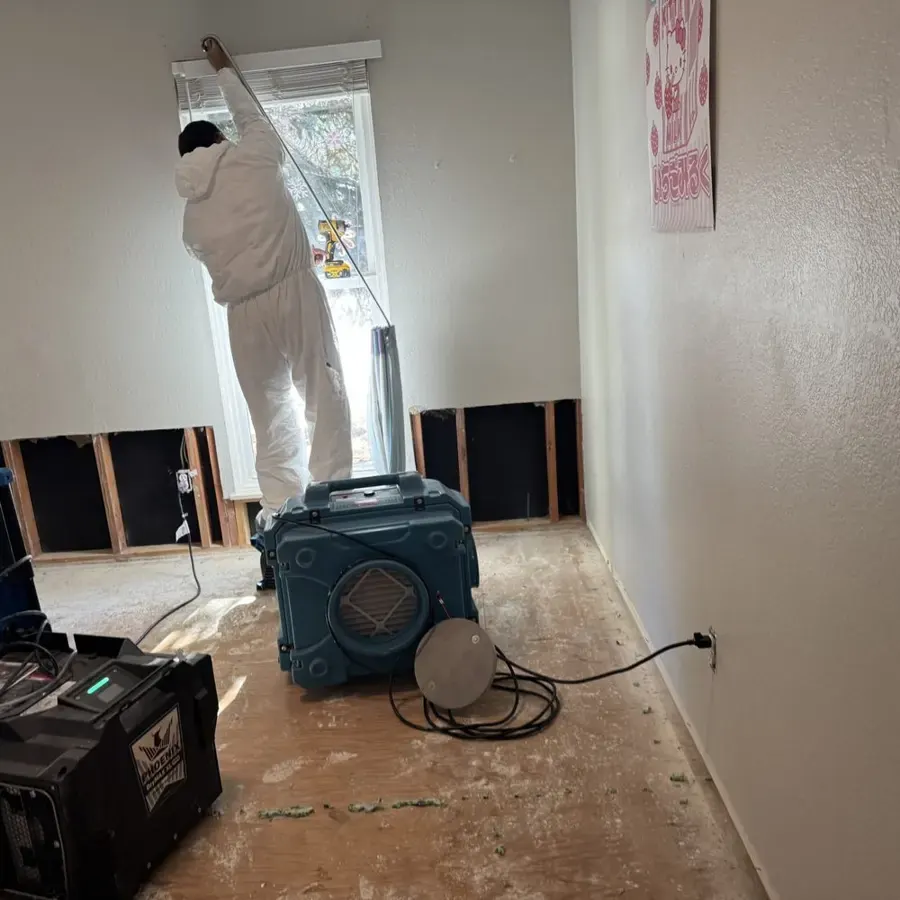
A ceiling leak water damage job starts with finding the wet path. Moisture meters and a thermal camera trace the water from the stain back to the attic.
Wet insulation is removed and bagged. Drywall that has lost its shape or stayed saturated is cut out in clean sections so the framing can dry.
Air movers and dehumidifiers then dry the joists, the roof deck underside and the cavity above the ceiling. Readings are taken each visit until they match a dry reference.
The overview of hail roof leak water damage explains how that work fits around a roof repair.
Roof repair and water cleanup are different jobs
A roofer repairs shingles, flashing and the deck. That stops the next leak, but it does nothing for the water already inside the house.
Waiting for a roof repair before drying starts is a common mistake. The insulation and framing keep absorbing water the whole time.
For a pattern across the Golden area, the main hail roof leak water damage page shows the same sequence in more detail.
Signs a hail leak is hiding
Some hail leaks never show on the ceiling at all. The water stays in the attic and soaks the insulation, and the first signs are small.
A musty smell upstairs, a light switch plate that feels damp or a ceiling that looks a shade darker after rain all deserve a look from the attic hatch with a flashlight.
- Dark, matted insulation under the roof deck.
- Rust on nail points that poke through the sheathing.
- Daylight or water drops near a vent pipe or chimney.
- Stains on the wall near a ceiling corner.
What a claim file should show
Hail claims go smoother when the dates agree. The storm date, the date the leak was first seen and the dates of each cleanup step should read as one story.
Keep the roofer's estimate beside the drying logs, so the adjuster sees that the roof and the interior damage came from the same event.
Keeping the insurance file clean
Hail claims often involve both a roof adjuster and a water damage adjuster. Their notes need to match.
A dated record of the storm, the first stain and each drying reading shows the leak came from the hail event and not from age alone.
- Date and photograph the first stain and each change.
- Keep drying logs and moisture readings together.
- Save receipts for temporary repairs such as tarps.
- Ask the insurer in writing whether the roof and the interior water damage are covered under the same claim.
Questions
Can hail damage cause a leak weeks later?
Yes. Bruised shingles can crack after repeated rain, snow and freeze and thaw cycles, so the first ceiling stain often appears long after the storm.
Should a ceiling stain be painted over?
No. Paint hides the stain but not the wet insulation and drywall behind it. The area needs to be dried first.
Is a sagging ceiling an emergency?
Yes. A ceiling that bulges can hold a large amount of water and may fall. Keep people and furniture clear and have it opened safely.
Does the roof have to be fixed before the water cleanup?
Not always. Drying can start while the roof repair is scheduled, as long as the opening is covered so more water stays out.
How is wet insulation handled?
Wet insulation is usually removed because it stays damp for a long time and keeps water against the ceiling. New insulation goes in once the framing is dry.